A second life for the glasses in your drawer.
Specxy was a marketplace for refurbished prescription eyewear. We bought back old specs, restored them by hand, matched them to a new owner's prescription, and priced them at about a third of a new pair.
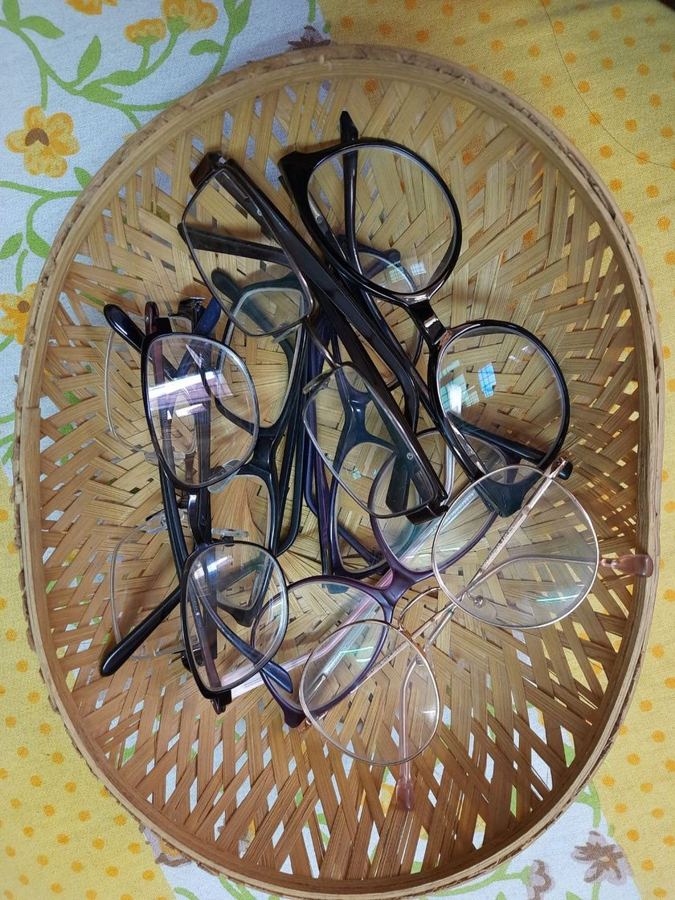
Glasses are built to last. We throw them away as if they weren't.
- Prescription
Power changes, children's especially, and a perfectly good frame becomes useless overnight.
- Wear & style
Frames break, go missing, or simply go out of style. In 2022 India had no system to take the old pair back.
- Speed
The biggest online stores took 5–6 days to deliver powered lenses. An emergency spare was hard to find.
- Price
A decent new pair cost ₹1,500–1,800, and every new frame means more material and energy spent making it.
of glasses get recycled.
people throw their old pair away.
of the 477M Indians who need glasses actually wear them.
Figures as cited in Specxy's 2022 pitch decks. Not independently re-verified for this page.
One pair, many owners.
Specxy ran on a closed loop. Old glasses came in as wallet points, went out as restored pairs, and came back again when the next prescription changed.
- Sell us your old specsA pickup partner collects the pair and checks its condition.
- Get Specxy Wallet pointsBuyback is paid as points (about ₹100 a pair), so the value stays in the loop.
- Buy refurbished, or newSpend points on a restored pair that matches your prescription, or on a new one.
- SubscribePlanned: a fresh pair every 12 weeks for people who like to change styles.
- Return the old pairIt goes back to refurbishing, and the loop starts again.
Four steps from obsolete to almost new.
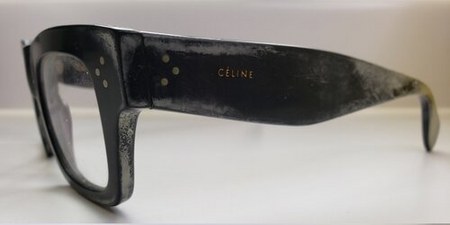
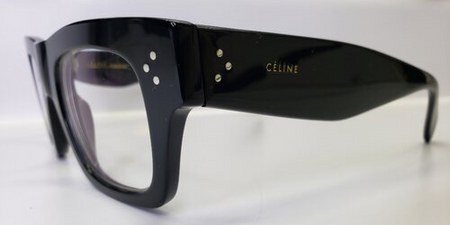 BeforeAfter
Before and after: frames refurbished by the Specxy team. Drag the handle to compare.
- 1
Vapour honing & polishing
A high-grit slurry under pressure strips grime and oxidation, leaving the material clean and ready for hand polishing.
- 2
Plastic mending
Heat and epoxy filling correct cracks, chips and other frame defects.
- 3
Hinge repair
The hinge is the usual failure point. Rivet and spring repairs make it work like new.
- 4
Lens reglazing
Surface scratches and imperfections are removed from the lens.
Shop by prescription, not by guesswork.
Most people know one thing about their glasses: their power. Specxy started there. Enter Sphere, Cylinder and Axis for each eye, and see only the frames that fit.
- SearchPrescription entry per eye: right (OD) and left (OS).
- FilterMatch both eyes or one, and pick single, bifocal, trifocal or progressive lenses.
- ResultsEach listing shows the lens prescription, so you can compare it with yours at a glance.
- DetailCondition, colour, style, size, IPD, tint and brand, then shop or save to a wishlist.
Rebuilt from Specxy's 2022 clickable prototype. Frames are photos from the team's collection; prices and prescriptions are sample data. This is not a live store.

| Sphere | Cylinder | Axis | |
|---|---|---|---|
| Right (OD) | |||
| Left (OS) |
Change a power and tap the white button, or press Play below.
Match prescription
₹400 to restore. ₹500–600 to own.
We priced every rupee of a refurbished pair before pitching it. Buyback, logistics, refurbishing and storage came to about ₹400, leaving roughly ₹100 per pair, about 20% net.
Unit economics from the 2022 Pitch Tank deck. Bars drawn to scale. Hover a segment for its value.
Three ways to earn
- Margin on every refurbished pair sold.
- A subscription: a fresh pair every 12 weeks, old pair returned.
- Later, the wider eyewear and eyecare catalogue.
Who it was for
- Children whose prescription keeps changing.
- Working families who won't pay ₹1,500+ for a pair.
- Teenagers who want new styles often.
- Buyers who care about waste.
- Anyone who needs a powered pair fast.
What would make it defensible
- Inventory across every power combination.
- The four-step refurbishing process.
- Specxy Wallet, which keeps customers in the loop.
Lenskart, Titan Eye Plus and Vision Express sold new frames online and in stores. None of them sold restored, prescription-matched pairs. That second-hand market was Specxy's opening.
Fewer frames in the bin. Cheaper sight. Local jobs.
Every restored pair is one that isn't manufactured
Old frames return to use instead of a drawer or a landfill.
About a third of the new price
₹500–600 against ₹1,500–1,800 for a comparable new pair.
Decent work in every city
Pickup partners, refurbishers, quality checkers and warehouse staff, hired from communities hit hardest by the pandemic.
These were the plan's goals. Specxy did not operate long enough to measure them, so no impact numbers are claimed here.
India's eyewear market, in USD billions
The decks also cited 1.2M glasses sold in India every day, 1 optical store per 70,000 people, and online purchases doubling from 22% (2017) to 44% (2020).
All figures as cited in the 2022 decks. 2024 was a projection at the time.
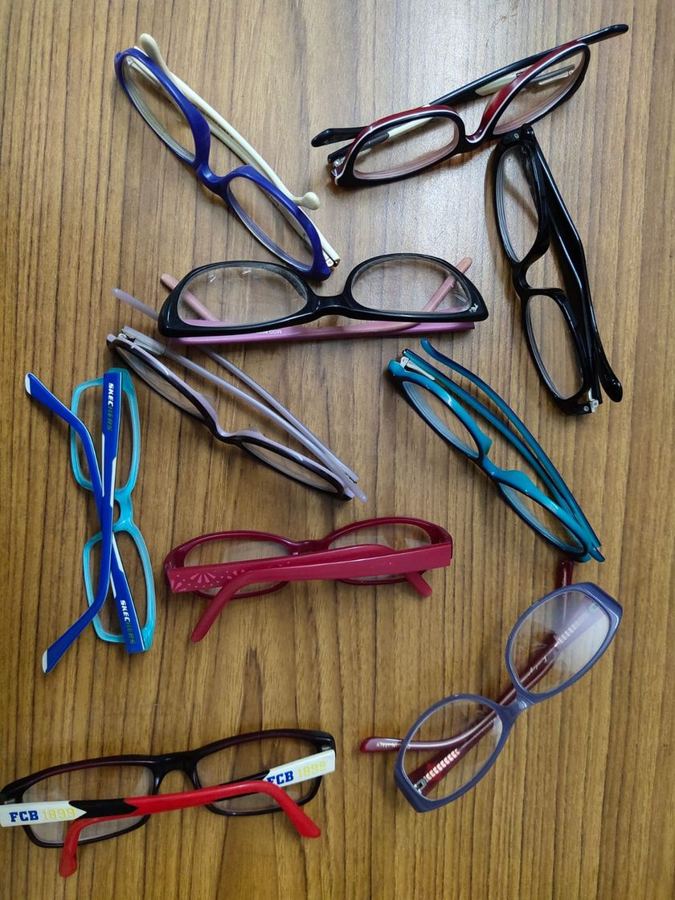
We started by collecting glasses.
Before any app, we checked whether people would hand over the pairs they no longer used. They did. These are some of the obsolete glasses we gathered.
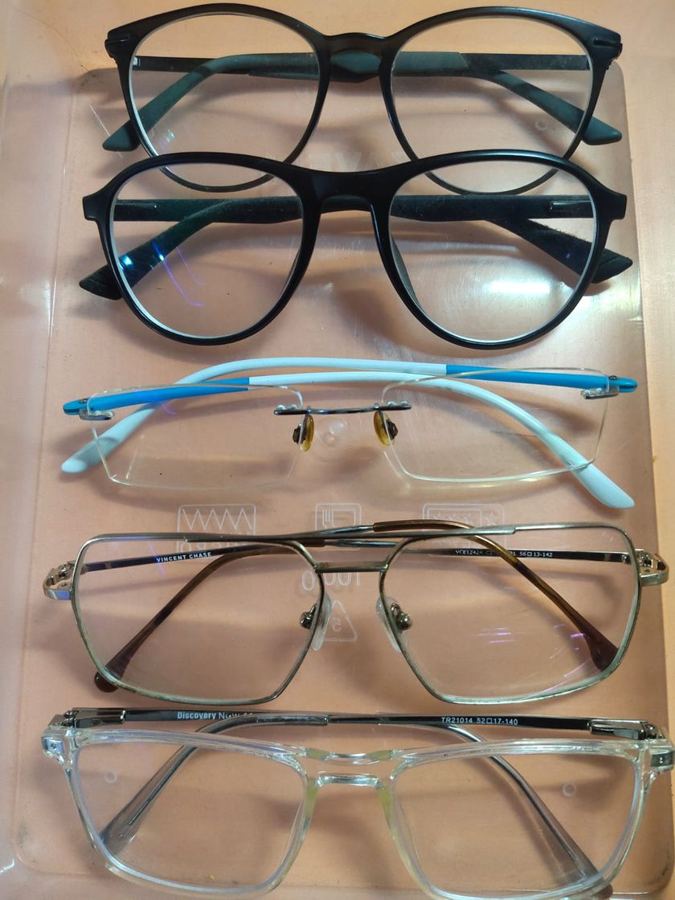
2022, in five results.
Five competitions in one season, from Manipal to Delhi to the Hult Prize regionals in Dhaka.
| Result | Competition | Organised by | Year |
|---|---|---|---|
| Winner | Pitch Tank, Manipal Entrepreneurship Summit | MIT E-Cell × Manipal Universal Technology Business Incubator (MUTBI) | 2022 |
| 1st Runner-up | Hult Prize MAHE | Hult Prize on-campus programme, Manipal Academy of Higher Education | Mar 2022 |
| Finalist | Hult Prize Regional Summit, Dhaka | Hult Prize Foundation · held 27–28 May 2022 | May 2022 |
| Finalist | Idea Validation Competition | MIT E-Cell, Manipal | 2022 |
| Finalist | Udyamee: The Shark Tank Competition | Delhi Technological University (DTU) | 2022 |
Certificates
Verified documentsSelect a certificate to view it full size.
The roadmap we pitched
Planned, 2022- Jun 2022
Website and app development
- Sep 2022
Initial inventory, logistics network, and an alpha in our area
- Dec 2022
Beta run to prove the concept at scale
- Mar 2023
Multi-city pickup pilot
- Jun 2023
Full-scale launch
What happened: we validated supply (collecting glasses), the product (in-house refurbishing) and the experience (a clickable app prototype). Specxy did not launch commercially.
Four students, first year to third.
Omkar Patil
Came up with Specxy and led it through the 2022 season.
- Founded the venture and pitched it at every competition
- Designed the prescription-matching app prototype
- Built the business model and unit economics
- Ran the glasses collection and the refurbishing trials
Shivangi Somani
Anurag Shenoy
Raghav Shah
Specxy taught me to build from zero. I'm doing it again.
I'm now building EZ Bill. If you back early-stage founders, or want to hear more about Specxy, I'd like to talk.
Omkar Patil